



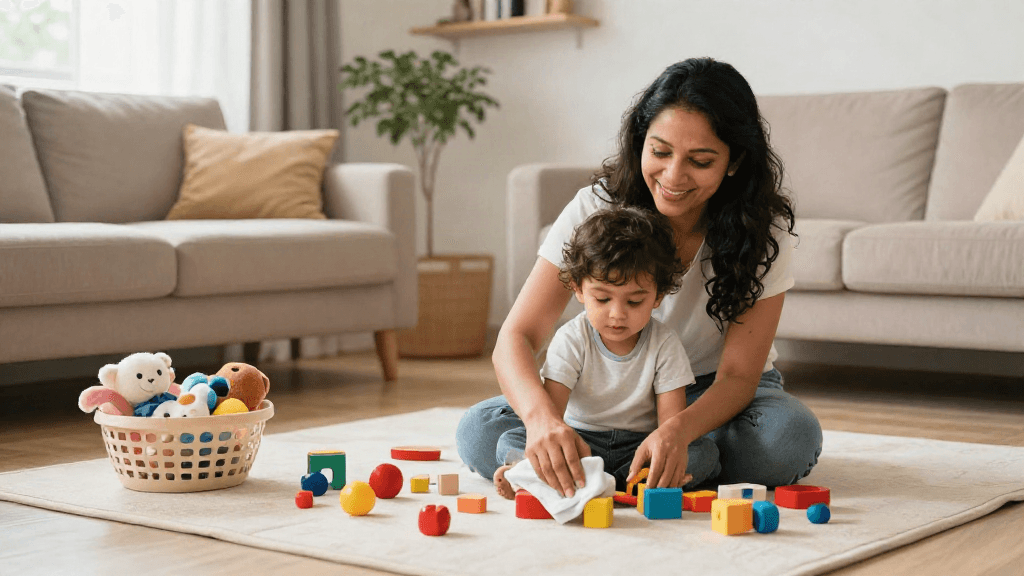
How to Sanitise and Clean Kids' Toys at Home: A Parent's Step-by-Step Guide
If you have ever picked up a teething ring from the floor, watched your toddler share a toy with a cousin mid-cold, or simply wondered how clean a borrowed toy really is, you are not alone. Learning how to sanitise toys at home is one of the simplest habits you can build for your child's health, and it takes far less time than most parents expect. This guide walks you through why toy hygiene matters, how to clean every kind of toy safely, and a weekly routine you can actually keep up with.
Why Toy Hygiene Matters for Babies and Toddlers
Babies and toddlers explore the world with their hands, and very often with their mouths. Toys pass between siblings, friends and playgroups, and they pick up saliva, food, dust and everyday germs along the way. A young child's immune system is still developing, so a quick clean now and then goes a long way towards preventing tummy upsets, colds and skin irritation.
There is a comfort factor too. When your child reaches for a toy, you want to feel confident it is genuinely safe. That confidence is exactly why parents value toys that arrive already sanitised, rather than having to wonder about the last time it was wiped down.
Before You Start: Four Simple Rules
Keep these basics in mind and you will avoid the two most common mistakes, which are soaking something that should not get wet and using a cleaner that is too harsh.
- Always check the manufacturer's label first. It tells you whether a toy is wipe-clean, washable or surface-only.
- Never soak toys that contain batteries, speakers or electronics, and never put wooden toys in water, as they can warp and crack.
- Rinse thoroughly. Any residue left behind from soap will end up on little hands and in little mouths.
- Let toys dry completely before they go back in the toy box, since damp corners are where mould likes to grow.
How to Clean Different Types of Toys
Different materials need different care. Here is how to handle the four kinds of toys you are most likely to find scattered around your home.
Plastic Toys
Plastic is the easiest to clean. For everyday grime, a soft cloth dipped in warm soapy water is enough. For a deeper clean, wash hard plastic toys in warm water with a little mild dish soap, scrub the crevices with a soft toothbrush, then rinse and air-dry on a clean towel. If you want to sanitise a hard plastic toy that has no batteries or stickers, a diluted vinegar-and-water spray works well and is gentle on your child.
Wooden Toys
Wood needs a light touch. Never submerge wooden toys or leave them wet. Wipe them with a barely damp cloth and a tiny amount of mild soap, then dry immediately with a soft towel. A small drop of food-grade oil, such as coconut oil, can keep the wood looking fresh without any harsh chemicals. For extra reassurance, a mild vinegar solution wiped on and carefully dried is a safe way to sanitise wooden blocks and stacking rings.
Fabric and Soft Toys
Soft toys, cloth books and fabric balls collect dust and become a home for germs. Check the care label first. Many plush toys can go into the washing machine on a gentle cycle in a mesh laundry bag, then they should be air-dried fully in the sun. For toys that cannot be washed, sprinkle them with baking soda, let it sit for fifteen minutes, then brush and vacuum it away. Putting soft toys in the freezer overnight is another simple trick for a light refresh without water.
Battery-Operated Toys
Battery toys are wipe-only. Remove the batteries first where possible, then wipe the surface with a damp cloth or a mild sanitising wipe that contains no bleach. Do not get liquid near the battery compartment, buttons or speaker grilles. Let the toy air-dry before you replace the batteries and hand it back.
A Simple Weekly Toy-Cleaning Routine
You do not need to deep-clean everything every day. A light, repeatable routine is far more effective than an occasional big effort:
- Daily: wipe down the two or three toys your child is using most, especially anything that goes in the mouth.
- Midweek: refresh the most-touched toys with a quick soapy wipe and air-dry.
- Weekly: choose one material to deep-clean in rotation, so plastic one week, fabric the next, and so on.
- Monthly: sort through the toy box, remove anything cracked or broken, and give everything a full clean.
Keep a separate cloth and a small spray bottle just for toys, and wash your own hands before and after cleaning. Ten minutes a week is honestly all it takes.
How the EleFant Takes Hygiene Off Your Plate
At home, a good routine is in your hands. With a toy library, it should be handled for you. Every toy that leaves an EleFant hub is cleaned and passes through UV sanitisation, along with a quality and safety check, before it reaches your doorstep. That means when a fresh set of toys arrives for your child, it is not just new play waiting to happen, it is clean, checked and ready to use.
Because you swap toys regularly rather than storing them all, there is no dusty pile building up in the corner. As your child grows, new, age-appropriate toys simply arrive at your door, and the ones they have outgrown go back to be cleaned and loved by another family. Accidental damage is included in Toy care++, so a cracked wheel or a missing piece does not become your worry.
Final Thoughts
Sanitising your child's toys at home comes down to four habits: check the label, match the method to the material, rinse well, and dry fully. Pair that with a light weekly routine, and the worry about what is hiding on a favourite teddy simply fades away. When you would rather have that peace of mind built in, let the EleFant handle the cleaning for you.
Subscribe Now to give your child a steady stream of sanitised, safety-checked, age-appropriate toys, delivered to your door and swapped as they grow.


