



Toy Rental vs Buying Toys: Smarter Alternatives for a Clutter-Free Playroom
If you have ever stepped on a plastic brick at 7am, you already know the problem. Toys arrive with such joy, then pile up in corners, under sofas and along the skirting boards. Your child plays with a handful of favourites and grows out of the rest in weeks. Meanwhile the drawer keeps filling and the money keeps leaving. There is a smarter alternative, and it is simpler than you might think.
Why the toy pile keeps growing
Buying toys feels like the obvious choice. It is quick, it is familiar, and every birthday and festival adds a few more boxes to the shelf. The trouble is that children develop fast. A toy that is perfect at eighteen months is boring by two and a half. The puzzle your toddler loved in winter is ignored by summer.
So parents buy again. And again. Each purchase feels small, but over a year the total adds up to thousands of rupees, a storage problem, and a home that feels permanently under siege. Nothing is wrong with your parenting here. The buying model simply was not built for how quickly little ones change.
What a toy subscription actually looks like
A toy subscription flips the model. Instead of buying toys one by one, you pay a monthly amount for access to a large curated library of premium toys and books. Your child plays, learns and explores. When they are ready for something new, you swap.
the EleFant works exactly this way. The Mini Plan gives you two toys at a time for twelve months at Rs 3,600, which works out to Rs 300 a month. That covers unlimited swaps, free doorstep delivery and pickup, and a 100% damage waiver, so a dropped toy or a lost piece is not a family crisis. There is a 14-day money-back guarantee if it is not right for you. Behind it sits a library of over 1,000 premium, sanitised toys and books, supported by 18+ cities, 125+ franchise partners and more than 1.8 lakh registered families.
Toy rental vs buying toys: the real comparison
The honest question is not which one sounds nicer. It is which one gives your child more, for less, over a full year of play. Here is how the two compare.
Cost over a year
A single quality wooden toy often costs as much as a few months of a subscription. The Supreme Kitchen Set in the EleFant catalogue is priced at Rs 3,499 on its own. That is nearly the whole year of the Mini Plan, which gives you a rotating library instead of one item that will be outgrown.
Buying means paying full price for every new stage, every new interest and every new obsession, then storing all of it. A subscription spreads that cost thinly across the year and keeps the outflow predictable, so a toy surprise never derails the monthly budget.
Variety and developmental fit
This is where buying struggles most. You cannot buy your way to the right toy at every age, because you do not know in advance what will click. Sometimes the hit is a magnetic tile set that becomes a castle. Sometimes it is a wooden picnic set that sparks weeks of pretend play, like the 22-piece It's a Picnic set.
A library lets your child try widely without the family committing to each toy forever. Toys arrive matched to their current stage, and as their interests shift, so does what is on the shelf. Learning stays fresh, and so does the excitement of new-toy day.
Sustainability and clutter
Every toy you buy stays yours permanently, including the ones nobody plays with. Multiply that across millions of homes and it becomes a mountain of unused plastic and packaging. Sharing toys through a library means each item is played with by many children across its life instead of gathering dust in one home.
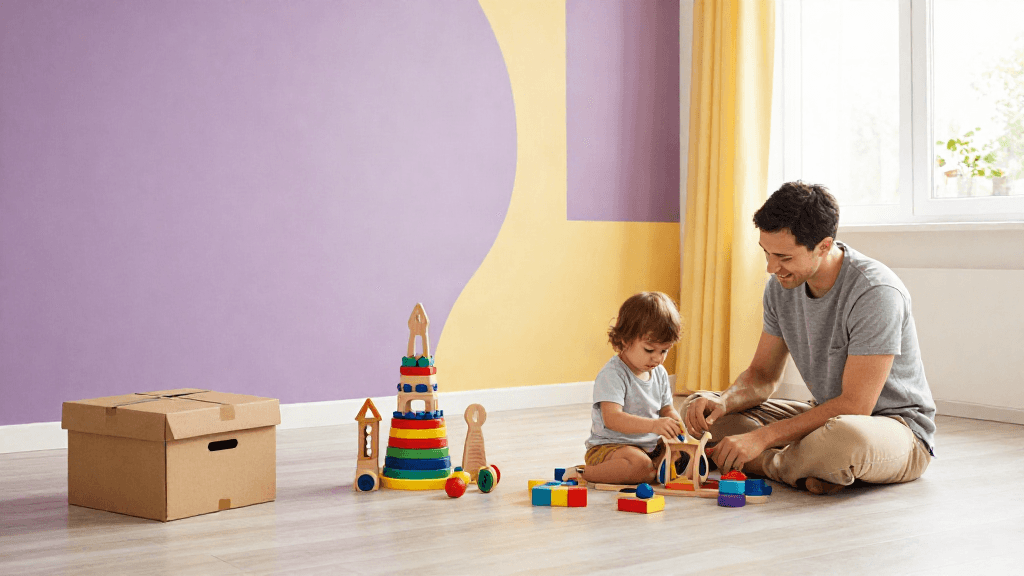
For your playroom, the difference is immediate. Two toys at a time instead of thirty. A floor you can see. A tidy corner that stays tidy, because everything in it is currently in use. Less clutter also means fewer arguments about tidying up, which no parent will complain about.
What to look for in a smart alternative
Not every library is built the same. When you compare options, check for a few things that genuinely matter to a busy household. Look for a hygiene process you can trust, since shared toys must be thoroughly cleaned and safety-checked between homes. Look for free delivery and on-time pickup, because a subscription that creates errands is not a convenience. Look for a damage waiver, so normal childhood wear is not billed back to you. And look for a wide, well-curated range, because choice is the whole point.
How to make the swap without stress
You do not have to purge the toy box on day one. Start by noticing what your child actually plays with this week, then let the library handle the rest. Keep the few deeply loved items. Let the subscription supply everything else, and let the rotation do the work of keeping play interesting.
The practical loop is short: choose your toys in the app, they arrive at your door, your child plays and grows, and you swap when you are ready. No queues, no store trips, no storage problem that grows faster than your child.
The quiet upgrade to your playroom
Toy rental vs buying toys is not really a debate about frugality or frugal parenting. It is a choice about what your home feels like and what your child gets to experience. Buying gives you ownership of a shelf that slowly stops being used. A subscription gives your child a constantly renewed world of play, keeps your space calm, and turns an unpredictable expense into one small, predictable payment.
If the toy pile has started to feel like it is running the house, this is the moment to try something simpler. Explore the plans, pick the one that fits your family, and let the toys come to you. Subscribe Now, and watch what your playroom looks like in a month.


